
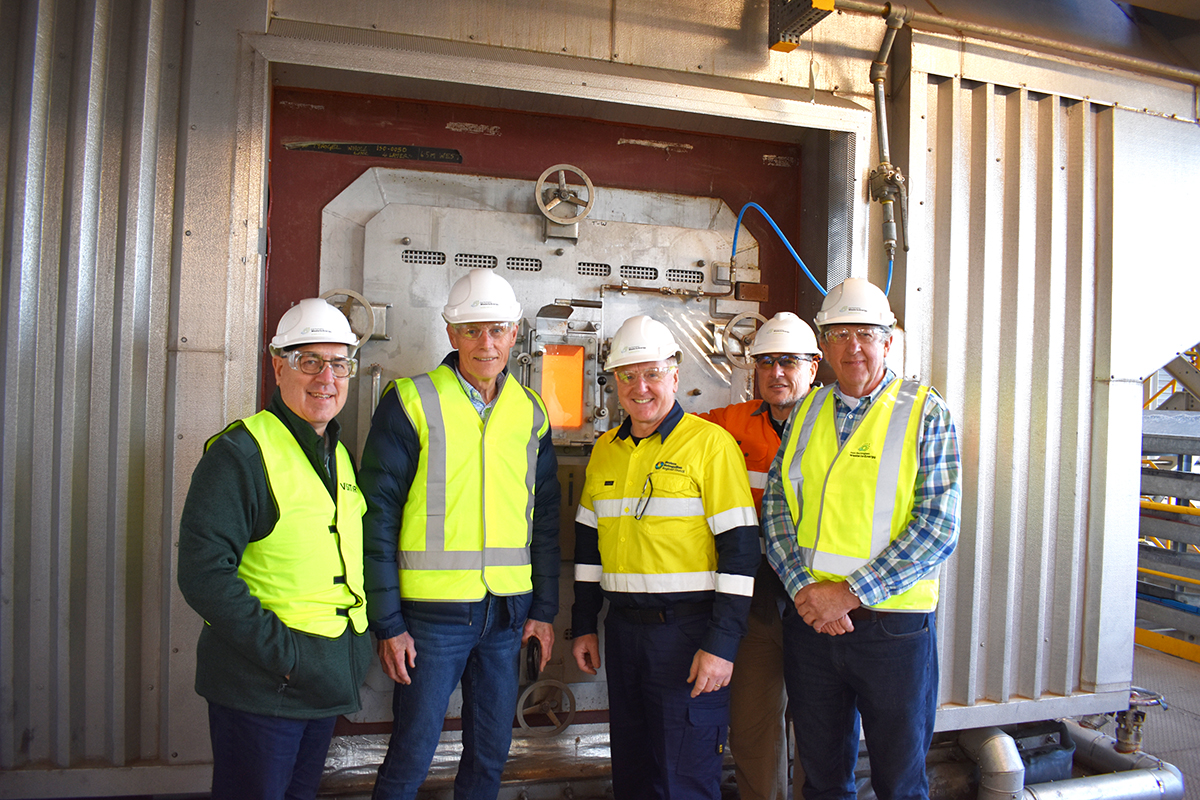
Around 9,100 tonnes of household waste each year will be diverted from landfill through a new arrangement with East Rockingham Waste to Energy (ERWtE).
Household waste collected in red-lidded bins across the Western Metropolitan Regional Council’s five member councils is now being recovered for energy instead of being sent to landfill, delivering environmental and economic benefits for local communities.
Approximately 9,100 tonnes of residual household waste will be diverted from landfill each year and processed at ERWtE, where it will be used to generate electricity for the Western Australian grid. WMRC Chair Cr Paul Kelly said the transition marks an important step in reducing dependence on landfill while extracting value from residual waste.
“Recovering energy from residual waste delivers a better outcome than landfill by reducing the amount of waste buried while generating electricity for the community,” Cr Kelly said.
WMRC awarded a contract for the processing of residual waste to East Rockingham Waste to Energy in 2021. Following the successful achievement of first fire on waste during commissioning, residual waste from WMRC member councils is now being delivered to the facility for energy recovery.
East Rockingham Waste to Energy General Manager Alan Turner said the facility is helping convert non-recyclable waste into a useful resource.
“Achieving first fire on waste and receiving waste from partner councils are significant steps as we continue the commissioning process and progress towards full operations,” Mr Turner said.
“The facility is designed to divert residual waste from landfill while generating enough electricity to power more than 36,000 homes when fully operational.”
WMRC Chief Executive Officer Stuart Devenish said the move does not change the organisation’s commitment to waste avoidance, recycling and organics recovery.
“Our priority remains to reduce waste, increase recycling and maximise resource recovery,” Mr Devenish said.
“Waste to Energy sits below waste avoidance, reuse, recycling and organics recovery in the waste hierarchy and is intended only for material that cannot be practically recovered through existing systems.”
“It provides member councils with a competitive alternative to landfill for managing the residual waste that remains after recycling and organics recovery opportunities have been exhausted.”
In addition to reducing reliance on landfill, Waste to Energy provides value through competitive disposal and haulage costs while avoiding the State Government landfill levy, which is expected to increase as Perth’s remaining landfill capacity declines.
Find out more about the Waste to Energy process here.
-Ends-
Media contacts:
Western Metropolitan Regional Council
Cr Paul Kelly – Chair
Mobile: 0419 666 233
Email: pkelly@claremont.wa.gov.au
Stuart Devenish – Chief Executive Officer
Mobile: 0423 683 762
Email: stuart.devenish@wmrc.wa.gov.au